
New Mortgage Insurance Rules for 3-to-50-Unit Buildings: What Changes on February 1, 2027
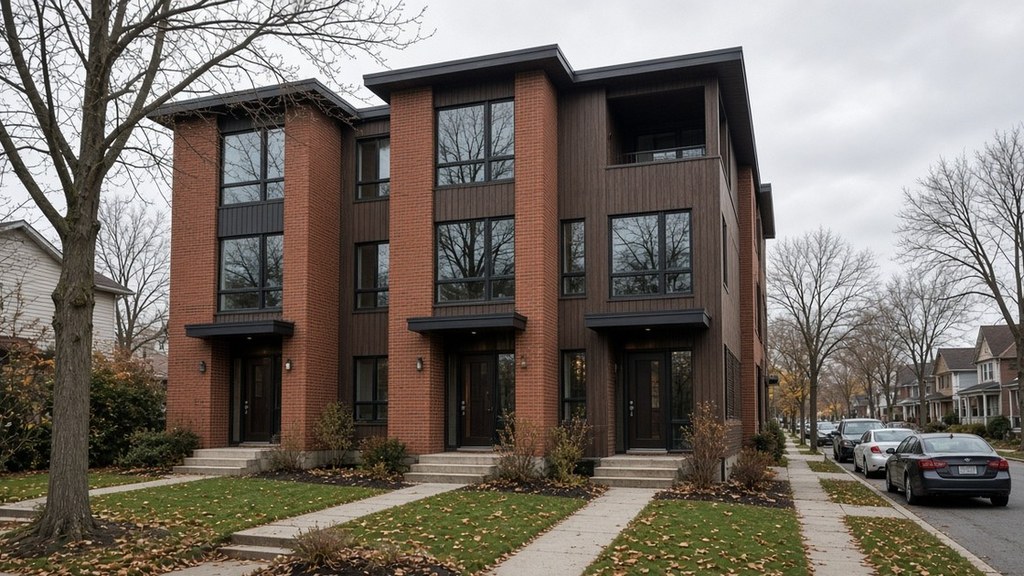
Alongside Budget 2026, released on November 5, 2026, the Department of Finance Canada published a technical backgrounder on new mortgage insurance rules for "missing middle" housing: new three- and four-unit homes, and residential buildings with five to 50 units.
The new products become available for mortgage insurance applications that lenders submit to insurers on or after February 1, 2027. That date is the day applications can be filed. It is not a promise that every deal will fund on February 1.
This post walks through what that backgrounder and Budget 2026, Chapter 3 actually say, what it may mean for small multiplex investors in Ontario, and what is still unclear. It is not mortgage, legal, or tax advice. Lenders and insurers will still apply their own underwriting, and the published parameters could be updated before launch.
What changed
Two related changes were announced together. The detailed limits are in the table below.
First, mortgage insurers will have more flexibility to insure new three- and four-unit housing: the construction of new homes, and the purchase of newly built ones.
Budget 2026 uses its own example to show why this is a change. A homebuilder planning a $3 million fourplex would not qualify under current mortgage loan insurance rules, the budget says, because the property's value exceeds the $1.5 million cap and the builder would have to live in one of the units. Under the new parameters, that builder could obtain a loan insured by any mortgage loan insurer for up to 90 per cent of the property's value, then keep and rent all four homes with an insured mortgage amortized over up to 30 years, or sell the homes to individual buyers. That $3 million figure is the government's example, not a typical Ontario price. On that example, a 90 per cent loan would be $2.7 million, so the builder would need to fund the remaining $300,000, plus closing costs and any insurance premium. Premiums have not been published.
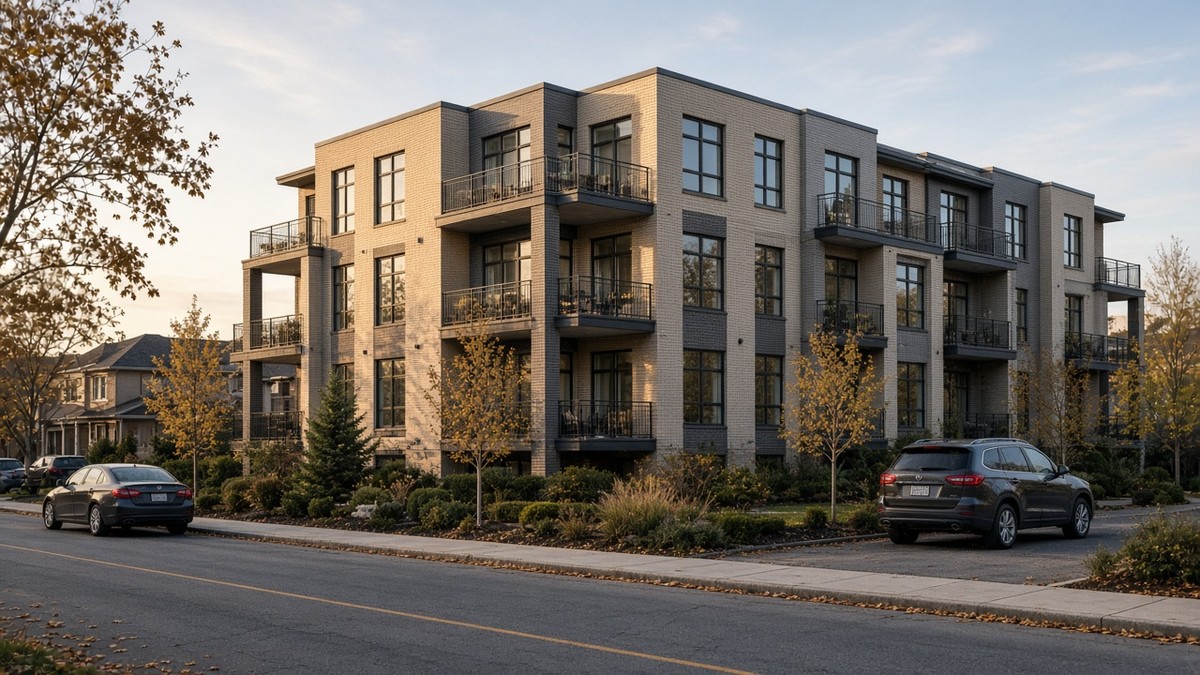
Second, private mortgage insurers will be permitted to offer mortgage loan insurance on five- to fifty-unit residential properties, including construction, purchase, refinance, and renewal. CMHC currently describes itself as Canada's only provider of mortgage loan insurance for multi-unit residential properties.
Both the backgrounder and Budget 2026 say these measures deliver on a commitment first flagged in the Spring Economic Update 2026.
Who it applies to
The two products are not the same. The table below is taken from the Finance Canada backgrounder.
| Parameter | New 3- and 4-unit housing | 5- to 50-unit properties |
|---|---|---|
| Permitted loan uses | Construction of new 3- and 4-unit homes; purchase of newly built 3- and 4-unit homes | Construction, purchase, refinance, renewal |
| Maximum loan-to-value | 90% of projected property value upon completion of construction | 90% for new construction; 85% for other transactions |
| Maximum amortization | 30 years | 50 years for new construction; 40 years for other transactions |
| Owner occupancy | Not required | Not required |
| Maximum property value | None | None |
| Borrower tests | Maximum gross debt service (GDS) ratio of 39%; maximum total debt service (TDS) ratio of 44%; plus the minimum qualification rate; at the time of loan approval, at least one borrower or guarantor must have a credit score of 600 or higher | Minimum debt coverage ratio (net operating income / total debt service) of 1.15 for a five-year term, or 1.1 for a 10-year term; minimum net worth of 25% of the loan amount, with a minimum of $100,000, based on assets held by the borrower in Canada |
| Property definition | New, or newly built, three- and four-unit eligible residential properties. The backgrounder does not further define "eligible" or "newly built." | Five to 50 self-contained dwelling units, each with cooking, sleeping, and bathroom facilities, held under a single legal title or ownership structure. The property cannot be formed by aggregating or bundling separately titled properties to meet the unit count. |
Source: Department of Finance Canada, "Mortgage Insurance Rule Changes to Support 'Missing Middle' Housing", published with Budget 2026 on November 5, 2026. The measures apply to mortgage insurance applications that lenders submit to mortgage insurers on or after February 1, 2027.
Construction financing is treated separately for both products. During construction, the maximum amortization and the published debt-service tests do not apply. Insurers will use their own underwriting to assess whether the borrower can service a construction loan.
What it means for small multiplex investors
For Ontario investors, the practical split is this.
A brand-new triplex or fourplex, or a newly built one you are buying, falls under the 3- and 4-unit rules. Qualification looks more like a residential mortgage, and you do not have to live in the building.
Buying, refinancing, renewing, or building a 5-to-50-unit property uses debt coverage and net worth tests, and the net worth has to be based on assets held in Canada. As a simple illustration, not a government figure: a $2 million loan would require at least $500,000 of net worth in Canadian assets, because 25 per cent of $2 million is $500,000. Refinance and renewal are listed only for this 5-to-50-unit product, not for the 3- and 4-unit product.
This matters for the kind of work Inner Circle members already study. Members have walked through a Toronto project that turned one unit into 10, a Hamilton triplex converted into a five-plex, and a triplex converted into a 9-plex on infill lots. Those case studies are about adding units. Whether a conversion or a substantial addition is treated as "new construction" under these insurance rules is not spelled out in the backgrounder. That is one of the first questions to take to your lender or mortgage broker, well before February 1.
The 5-to-50-unit rules also cover existing buildings through purchase, refinance, and renewal. If you already hold a small apartment or a larger multiplex, ask whether an insured refinance or purchase would be available once applications open. Our look at a multiplex that generates $7,800 a month and our Ontario multi-unit market update are useful companions when you run those numbers, but eligibility will depend on title, unit count, debt coverage, and net worth, not on a case study.
Insurance eligibility is not the same as a lender offering you a loan. The backgrounder sets the outer limits. Individual insurers and lenders can be stricter, and premiums have not been published.
Things to watch out for, and what is still unclear
Existing 3- and 4-unit buildings. The new 3- and 4-unit product covers only construction of new homes and the purchase of newly built homes. It does not list purchase, refinance, or renewal of an existing, previously occupied triplex or fourplex.
What "newly built" and "new construction" mean. The documents do not define how new a building must be, or whether a conversion, a major renovation, or adding units to an existing house counts.
Premiums. The backgrounder does not publish insurance premiums or application fees, so a true cost comparison is not possible yet.
The February 1, 2027 date. Coverage is for applications lenders submit to mortgage insurers on or after that date, not applications filed earlier.
Title, units, and net worth. A 5-to-50-unit property must sit on a single legal title or ownership structure. Bundling separately titled houses just to hit five units is not allowed, and each unit must be self-contained. The 25 per cent net worth test (minimum $100,000) is based on assets held by the borrower in Canada.
Construction loans use a different test. The amortization caps and published debt-service ratios do not apply to construction financing. Insurers will set their own criteria for that stage.
CMHC's existing multi-unit programs are separate. CMHC already insures standard rental buildings with at least five units, currently at a maximum 85 per cent loan-to-value, with amortizations of up to 40 years for existing properties and 50 years for new construction, and a net worth test of at least 25 per cent of the loan. It also offers MLI Select for projects that make affordability, energy, or accessibility commitments. The new rules open 5-to-50-unit insurance to private insurers and allow 90 per cent loan-to-value for new construction under the published parameters. They do not automatically replace CMHC's products.
How to prepare before February 1, 2027
You cannot file an application under these rules until February 1, 2027, but you can get ready.
- Take your project to a mortgage professional who works with multi-unit and construction financing, and ask which of the two products, if either, could apply.
- If you are planning a conversion or an addition of units, ask whether the insurer is likely to treat it as new construction. Once guidelines are out, get that in writing if you can.
- For a 5-to-50-unit plan, assemble a net worth picture based on assets in Canada, and a simple debt coverage estimate using expected net operating income.
- For a new 3- or 4-unit plan, review credit, income, and other debts against the 39 per cent GDS and 44 per cent TDS caps, including the minimum qualification rate.
- Confirm the legal title and the number of self-contained units. If the plan depends on assembling several lots or existing houses, the single-title rule may be a problem.
- Read the official backgrounder yourself, and check it again in January 2027 in case updates, premiums, or definitions are published.
FAQ
When do the new mortgage insurance rules for 3-to-50-unit buildings start?
They apply to mortgage insurance applications that lenders submit to mortgage insurers on or after February 1, 2027. The Department of Finance Canada published the parameters on November 5, 2026, alongside Budget 2026. An application submitted before February 1, 2027 would not be covered by these measures, based on the official wording.
Can I use the new 3- and 4-unit insurance on an existing triplex or fourplex?
The Finance Canada backgrounder allows two uses only: construction of new three- and four-unit homes, and the purchase of newly built three- and four-unit homes. It does not list the purchase, refinance, or renewal of an existing, previously occupied 3- or 4-unit building. If your deal is an older multiplex, ask your lender whether any other insured product applies; do not assume these new flexibilities do.
What is the maximum loan-to-value on a 5-to-50-unit building?
Under the published parameters, the maximum loan-to-value is 90 per cent for new construction and 85 per cent for other eligible transactions, which are construction, purchase, refinance, and renewal. There is no maximum property value and no owner-occupancy requirement. Lenders and insurers can still set tighter limits.
Do I have to live in the building to get this insurance?
No. Both the new 3- and 4-unit product and the 5-to-50-unit product have no owner-occupancy requirement, according to the Finance Canada backgrounder. You could, in the government's own fourplex example, rent out all of the units. Living in the building is not required, but it is also not a substitute for the other eligibility tests.
What net worth do I need for an insured 5-to-50-unit mortgage?
The borrower must have a minimum net worth equal to at least 25 per cent of the loan amount requested, with a minimum of $100,000. That net worth is based on assets held by the borrower in Canada. The backgrounder does not publish a net worth test for the new 3- and 4-unit product, which instead uses gross and total debt service ratios and a minimum credit score of 600.
Does converting a house into a multiplex count as new construction?
The official documents do not say. The 3- and 4-unit product is described as applying to new and newly built homes, and the 5-to-50-unit product offers a higher 90 per cent loan-to-value and a 50-year amortization for new construction, but neither document defines whether a conversion or a unit addition qualifies. That is a question for your lender and insurer once their guidelines are released, and it should not be treated as confirmed.
Want help thinking this through?
If you are weighing a multiplex, a conversion, or a small rental building, it helps to look at the numbers with other Canadian investors who are doing this work. Rock Star Inner Circle hosts a free live training class on real estate investing. You can see the next date and reserve a spot on that page.
This article summarizes official federal parameters as they stood when this post was written. Always confirm the current rules with your lender and with the Department of Finance Canada backgrounder before you act.

